
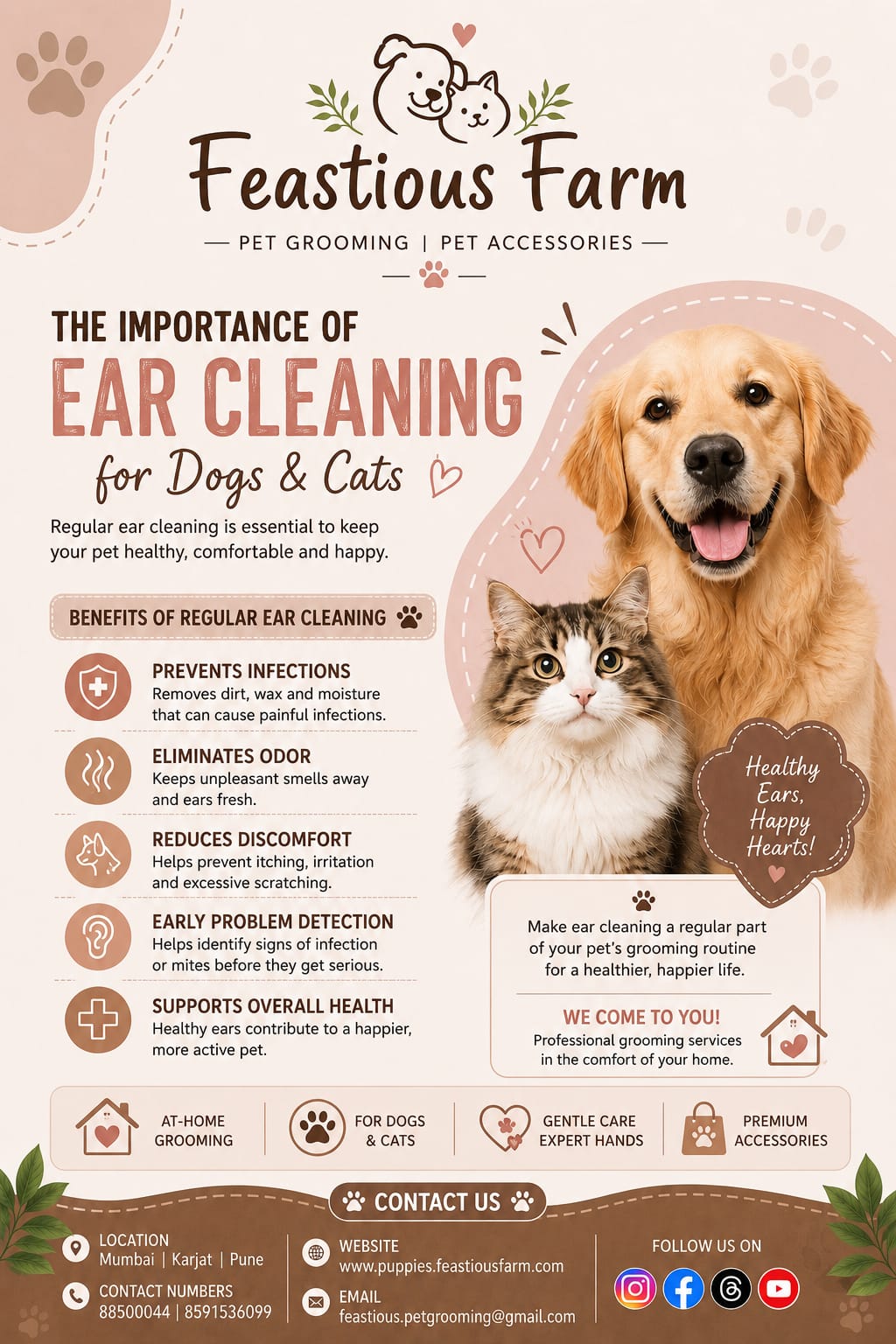
Ear Cleaning for Dogs & Cats: Why It Matters More Than You Think
When it comes to pet grooming, ear cleaning is often overlooked. However, keeping your pet's ears clean is essential for preventing infections, reducing discomfort, and maintaining their overall health.
Why Is Ear Cleaning Important?
Dogs and cats have an L-shaped ear canal, which easily traps wax, dirt, moisture, and debris. If left unchecked, this buildup can lead to painful ear infections, bad odor, irritation, and even hearing problems.
Regular ear cleaning helps:
Prevent ear infections
Remove wax and dirt buildup
Reduce bad odor
Keep ears dry and healthy
Detect ear problems early
Do Dogs and Cats Need the Same Ear Cleaning?
Dogs:
Floppy-eared breeds like Labradors, Cocker Spaniels, and Beagles, as well as dogs that swim often, usually need regular ear cleaning because their ears trap more moisture.
Cats:
Healthy cats rarely need routine ear cleaning since they groom themselves well. Clean their ears only if you notice wax buildup or if advised by a veterinarian.
Signs Your Pet Needs Ear Cleaning:
Check your pet's ears regularly. They may need attention if you notice:
Frequent head shaking
Excessive scratching
Bad smell
Redness or swelling
Wax or unusual discharge
If you see dark, coffee-ground-like debris or your pet seems to be in pain, consult your veterinarian before cleaning.
How to Clean Your Pet's Ears Safely?
Follow these simple steps for safe ear cleaning:
Inspect the ears for redness, swelling, odor, or discharge.
Apply a veterinarian-approved ear cleaner.
Massage the base of the ear for 20–30 seconds to loosen debris.
Let your pet shake their head naturally.
Wipe the outer ear gently with cotton or gauze.
Never clean deeper than your finger can comfortably reach.
What to Avoid During Ear Cleaning?
For safe ear cleaning, never use:
Cotton swabs (Q-tips)
Alcohol
Hydrogen peroxide
Vinegar or homemade solutions
These can irritate the ear or push debris deeper into the ear canal.
How Often Should Ear Cleaning Be Done?
There is no fixed schedule.
Dogs: Every 2–4 weeks if they have floppy ears, swim frequently, or are prone to wax buildup.
Cats: Only when necessary or recommended by a veterinarian.
Over-cleaning can also irritate the ears, so clean only when needed.
Professional Ear Cleaning:
Professional grooming team provides gentle and hygienic ear cleaning for both dogs and cats using pet-safe products. We carefully inspect every ear for signs of infection while ensuring your pet remains calm and comfortable throughout the grooming session.
Healthy ears mean a happier pet—and regular ear cleaning is one of the easiest ways to keep your furry companion healthy.